How to Choose Pilates Beds for Global Buyers in 2026?
Choosing Pilates Beds in 2026 requires more than comparing prices, colors, and promotional claims. Global buyers must assess user safety, construction quality, supplier reliability, and long-term operating costs. The Global Wellness Institute reported that the physical activity economy reached approximately US$1.06 trillion in 2023. This growth signals stronger demand for professional training equipment, including Pilates apparatus used in studios, hotels, rehabilitation centers, and private homes.
Demand is expanding. Expectations are also rising.
The 2024 Global Wellness Economy Monitor emphasizes that consumers increasingly value structured movement, preventive health, and accessible exercise experiences. Meanwhile, the American College of Sports Medicine’s Worldwide Survey of Fitness Trends continues to highlight technology-supported, personalized, and functional training. These trends affect how buyers should evaluate Pilates Beds. A stable frame, smooth carriage, quiet wheels, adjustable springs, and durable upholstery can directly influence daily user experience. Small details matter, especially when equipment serves multiple clients every hour.
However, no single model fits every market. That point is easy to overlook. A compact bed may suit a home studio but restrict taller users and advanced exercises. A heavier commercial model may offer better stability but increase shipping costs and installation complexity. Buyers should verify load ratings, replacement-part availability, warranty terms, packaging protection, and compliance documentation before placing an international order. Supplier experience also deserves careful review through factory audits, sample testing, and real customer references.
Some specifications look impressive on paper. They may still disappoint in practice. This guide explains how global buyers can compare Pilates Beds more objectively in 2026, balancing performance, safety, logistics, and total ownership value.
Classify Pilates Beds by Function: Reformer, Cadillac, Chair, and Barrel
How to Choose Pilates Beds for Global Buyers in 2026?
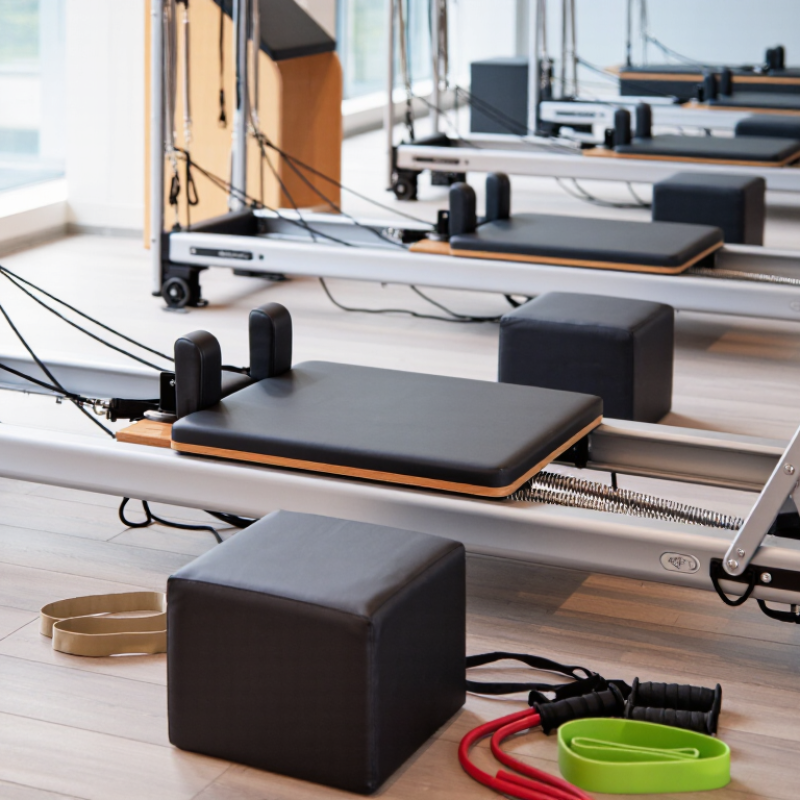
A Pilates bed should match the movement, not merely the room. The Reformer uses springs, a carriage, and straps for controlled resistance. It suits studios offering rehabilitation, strength training, and group classes. The Cadillac adds a tower, trapeze, and adjustable springs. It needs more space, but supports assisted stretching and advanced instruction. The Chair is compact and demanding. It challenges balance through pedals and upright movements. The Barrel focuses on spinal extension, breathing, and mobility. It is less versatile, yet valuable for corrective sessions.
Market context matters.
The Global Wellness Institute reported that the physical activity economy reached about 1.1 trillion US dollars in 2022. Its 2024 research projects continued growth through 2027. Meanwhile, the American College of Sports Medicine repeatedly lists Pilates among notable fitness trends. These figures suggest broader demand, but they do not guarantee local profitability. Buyer decisions still depend on instructor skills, room dimensions, service access, and import costs. A beautiful Cadillac may become an expensive obstacle.
Tips: Measure ceiling height, door width, and clearance around every bed. Compare spring resistance ranges, upholstery density, load ratings, and replacement parts. Ask for test videos and maintenance instructions.
Choose the Reformer for broad commercial use.
Choose the Cadillac for therapeutic versatility.
Choose the Chair when space is limited.
Choose the Barrel for mobility-focused programs.
My caution is simple: product categories overlap, and specifications can be incomplete. A trial session often reveals more than a polished brochure.
Compare Reformer Dimensions: 90–100 in Long and 24–26 in Wide
For global buyers in 2026, reformer dimensions deserve careful attention. Many Pilates beds measure 90–100 inches long and 24–26 inches wide. This range suits many studios and home users. However, it is not a universal answer. A 96-inch frame can provide smoother carriage travel for taller users. A shorter 90-inch model may fit better in compact rooms. Measure the full frame, including footbar movement and storage clearance.
Width changes both comfort and training control. A 24-inch bed uses less floor space and may feel responsive during precise footwork. A 26-inch bed gives more room for broad shoulders, side exercises, and beginners who need confidence.
More width is not always better. It can make a narrow room feel crowded. Leave walking space on both sides, especially in shared studios. Around 24–30 inches of clearance is a practical target, though local layouts differ.
I have found that buyers often measure only the equipment footprint. That mistake can complicate installation later. Check doorway widths, lift dimensions, ceiling height, and packaging size before ordering. Convert inches to centimeters for local contractors. One inch equals 2.54 centimeters.
Also inspect the usable carriage length, not just the external frame length. Specifications can look impressive while usable space feels limited. A test session with a user near the tallest expected height is worthwhile. Small details matter.
Evaluate Resistance Systems: 4–5 Springs, Load Ratings, and Adjustability
For global buyers in 2026, resistance design deserves more attention than upholstery color.
A Pilates bed with four or five springs can create a useful training range. Four springs often feel simpler to balance and adjust. Five springs may offer finer progression, but only when spring tensions are clearly identified. During equipment checks, I look for labeled spring strengths, secure hooks, and smooth carriage travel. Small details matter.
Do not treat the maximum load rating as a performance promise.
It usually describes a tested static limit, not repeated movement under professional use. Ask whether the rating covers the user, accessories, and dynamic force together. A 120-kilogram rating may sound sufficient, yet heavier clients and vigorous exercises can change the real demand. Verify test methods, frame materials, and maintenance guidance through technical documents. Claims without evidence deserve caution.
Adjustability should work without tools or awkward reaching.
Check spring attachment points, footbar positions, rope lengths, and shoulder-rest settings. A good system lets an instructor change resistance while maintaining client alignment. This helps shared studios serve different experience levels. Still, more settings do not automatically mean better control. Too many unlabeled options can slow a session.
I once underestimated this issue. A clear resistance chart would have prevented confusion.
Buyers should request a live demonstration, inspect locking parts, and test the bed with several body sizes before ordering internationally. Shipping vibration can loosen fittings. Plan a post-delivery inspection.
Calculate 2026 Landed Costs: MOQ, Freight, Duties, Warranty, and ROI
For global buyers in 2026, a Pilates bed is not priced by factory quote alone. Calculate landed cost before comparing suppliers. Record unit price, packaging, MOQ, inspection, inland transport, ocean or air freight, insurance, duties, taxes, and destination delivery. A low quote can become expensive after a 20-unit minimum order. Measure warehouse space too. Unused inventory quietly reduces ROI.
Build three scenarios: conservative, expected, and optimistic. Use current freight quotations, official tariff classifications, and written customs guidance. Duty rates differ by destination and product specification. Ask for carton dimensions and gross weight, not estimates. A 2.2-meter package may require special handling or lift-gate delivery. Warranty cost deserves its own line. Include spare parts, labor, return freight, and downtime. Confirm whether coverage starts at shipment or installation.
Calculate landed unit cost by dividing total delivered expenditure by sellable units. Then estimate ROI from realistic utilization, selling price, maintenance, payment fees, and local taxes. Twenty units may look efficient, but two unsold beds distort the return. My first spreadsheet ignored currency movement; the margin disappeared after settlement. That mistake still matters. Add a 5–10% contingency, but do not use it to hide weak data. Request pro forma invoices, test records, warranty terms, and delivery milestones before paying. Independent inspection can confirm dimensions and accessories. Recheck every assumption when freight or exchange rates change.
How to Choose Pilates Beds for Global Buyers in 2026?
2026 landed-cost comparison for a 20-unit MOQ. The model includes an estimated factory price, allocated ocean freight, destination duty, and a warranty reserve. Gross ROI is calculated as (selling price − landed cost) ÷ landed cost.
Planning assumptions: Factory price: US$1,250 per bed; warranty reserve: 2% of factory price; freight is allocated per unit at a 20-unit MOQ. Duty rates are planning estimates and must be confirmed against the final HS code, customs valuation, and destination regulations. VAT, sales tax, brokerage, storage, inland delivery, payment fees, and marketing costs are excluded.