Leave Your Message

How to Choose the Best Pilates Machine for Your Studio

Choosing the best Pilates machine for your studio is less about buying the most expensive model and more about matching equipment to real classes. A reformer that works well for one studio may feel awkward in another. Consider your available floor space, class size, teaching style, and the experience levels of your clients. Measure carefully. Leave room for safe movement around each machine, not just enough space to fit it.

Look closely at construction, adjustability, and everyday maintenance. A stable frame, smooth carriage, secure straps, and clearly marked spring settings can make instruction easier and help clients feel confident. Ask suppliers about materials, warranty coverage, replacement parts, and service support. If possible, test the machine with different users. A tall client and a beginner may notice issues that a quick showroom demonstration misses. The right Pilatesmachine should suit your studio’s routines and be practical to maintain, not simply look impressive in photographs.

Budget matters, but the purchase price is only part of the decision. Include delivery, installation, upkeep, and the cost of replacing worn components. Compare specifications rather than relying on broad claims such as “professional grade.” Details matter. No single machine is best for every studio, and product descriptions cannot replace hands-on testing. Even experienced instructors may revise their preferences after teaching on new equipment. That is worth admitting. Use your client feedback, trial sessions, and a realistic equipment plan to guide the choice. A thoughtful selection can support consistent teaching while leaving room for your studio to grow.

How to Choose the Best Pilates Machine for Your Studio

Define Studio Needs by Class Size, Client Profiles, and Session Formats

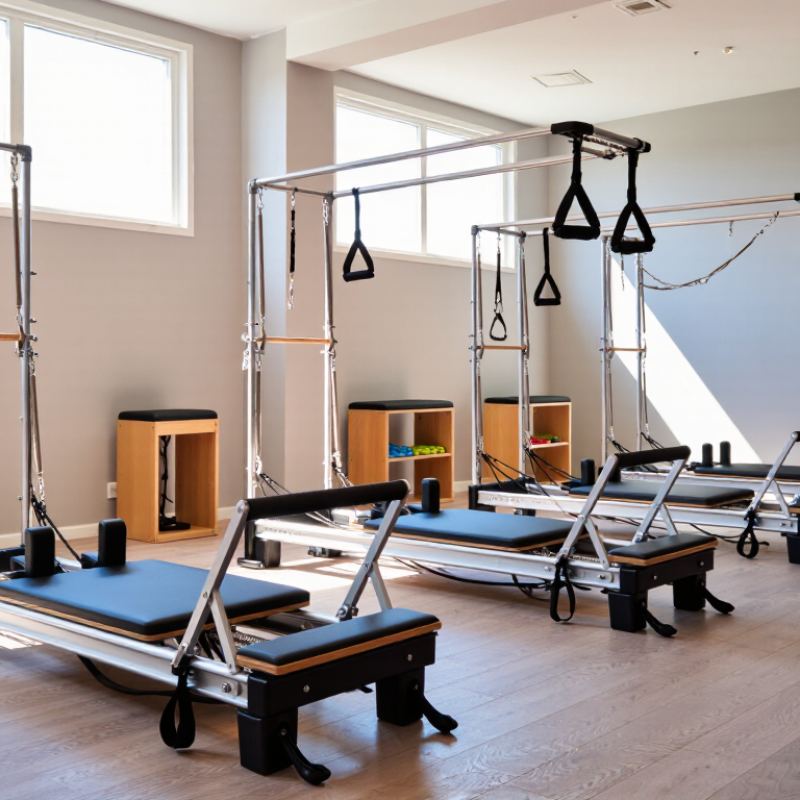
A studio’s class size should shape the machine choice before aesthetics do. In a six-person room, several reformers with enough clearance for safe transitions may serve better than one versatile machine and crowded walkways. Count usable floor space, not just total square footage; leave room for instructors to observe alignment and adjust springs. ClassPass’s 2024 Look Back report named Pilates the most-booked workout on its platform for a second year. That signals strong interest, but it does not tell you how many machines your studio needs. Local bookings and waitlists are more useful.

Client profiles change the calculation. Beginners may need clear spring options and simple setup, while experienced clients may value a broader range of resistance and movement choices. Older adults or clients returning after a break may benefit from easier entry and exit. Ask instructors which adjustments they make most often. Small details matter. A machine that is difficult to reset between clients can quietly slow every session.

Session format matters, too. Private instruction gives the teacher room to use one machine in more varied ways; circuit classes require quick transitions and consistent setups. The ACSM’s 2024 worldwide fitness trends report highlights personalized training among continuing industry trends, but it does not prescribe Pilates equipment. Treat reports as context, not a shopping list. I still find capacity easy to overestimate. Trial a floor plan with instructor-led movements, then check whether clients can move comfortably between stations.

How to Choose the Best Pilates Machine for Your Studio - Define Studio Needs by Class Size, Client Profiles, and Session Formats

Studio setup Typical class size Client profiles Session format Suitable equipment mix Planning priorities
Private instruction 1 client; occasionally 2 Beginners, returning clients, and clients who benefit from individualized coaching One-to-one or duet sessions with frequent exercise adjustments One reformer with a tower attachment, or a reformer paired with a Pilates chair Prioritize adjustability, easy spring changes, stable construction, and clear access around the machine.
Small-group studio About 3–6 clients Mixed experience levels; clients who need options for different strength, mobility, or coordination levels Instructor-led circuit or small-group reformer classes A consistent set of reformers; consider a chair or wall-mounted spring unit for varied programming Match machines for consistent instruction and maintenance. Check carriage travel, instructor sightlines, and safe entry and exit routes.
Reformer group studio About 7–12 clients, depending on room layout and local requirements Clients with a range of fitness backgrounds who can follow group instruction and equipment cues Scheduled group classes using similar exercises across the room A uniform row or layout of reformers, with small props stored within easy reach Measure the room using the actual equipment footprint, including space for movement, teaching, access, and storage. Do not plan from machine dimensions alone.
Rehabilitation-focused practice 1–4 clients, based on the service model Clients who need close supervision or carefully adapted movement; clinical care should be provided by appropriately qualified professionals Individual sessions or closely supervised semi-private sessions Reformers with adjustable resistance; a tower or Cadillac-style table may support a broader range of supervised exercises Look for accessible mounting, stable support, adaptable spring settings, and enough room for instructor assistance.
Multi-format studio Varies by class; often a mix of private and group bookings Beginners, regular practitioners, and clients seeking different types of sessions Private training, reformer groups, and apparatus-based sessions A core set of reformers plus one or more complementary apparatus, such as a chair, tower, or Pilates barrel Choose equipment that supports the planned timetable. Confirm storage, changeover time, instructor training, and maintenance needs.
Compact or shared-use room 1–4 clients Clients served through appointments or limited-capacity classes Private sessions, duet training, or small classes with equipment reset between bookings A space-efficient reformer; a foldable or wall-mounted option may suit some rooms if its setup and storage requirements fit the schedule Verify the complete operating footprint, storage position, ceiling clearance, floor suitability, and unobstructed access before purchase.

Planning note: Class-size ranges are illustrative, not occupancy or safety limits. Confirm equipment dimensions and clearances with the manufacturer, and check applicable building, accessibility, and fire-safety requirements before finalizing a studio layout.

Compare Reformer Types Using Manufacturer Specifications and Intended Use

A studio reformer should match the classes you actually teach, not just look versatile on a product page. Compare standard reformers, tower-equipped models, and foldable designs by intended use. Standard models often suit frequent group sessions, while towers add options for spring-based exercises. Foldable units can save space, but check whether their frame and setup meet daily studio demands.

Read manufacturer specifications side by side. Note carriage travel, frame dimensions, spring types and count, footbar positions, and stated user-weight capacity. A longer carriage may better accommodate a wider range of body sizes, but measure your room with the carriage fully extended. Measure twice. Confirm that replacement springs and other service parts are available, and review warranty coverage rather than relying on broad durability claims.

Match resistance options to your class mix. Newer clients may benefit from clearly adjustable settings; experienced users may need more varied loading. If you teach rehabilitation-focused sessions, ask a qualified instructor to assess stability and access before choosing specialized attachments. Specs can still leave gaps. For example, they may not describe carriage noise or how quickly staff can change settings between clients. Request a demonstration, if possible, and record what feels awkward. That small uncertainty deserves attention.

Check Studio Access: ADA Standards Require 36-Inch Accessible Routes

Choosing a Pilates machine involves more than checking its footprint. Plan an accessible route through the studio before deciding where equipment will sit. Under ADA Standards, accessible routes generally need at least 36 inches of clear width, though specific exceptions apply. Measure the usable space between obstacles, not simply the distance between walls. A reformer’s footbar, handles, or nearby storage can narrow a route unexpectedly.

Walk the planned path from the entrance to the workout area and other essential spaces. Check doorways, tight turns, and gaps between machines with equipment in its working position. A tape measure helps, but an actual walkthrough can reveal awkward bottlenecks. I’ve seen tidy floor plans feel cramped once straps and accessories are in use. That’s easy to overlook. Requirements can vary by project, so confirm your layout with a qualified accessibility professional.

Tips: Mark proposed machine edges on the floor with removable tape. Keep the route clear of baskets, cords, and movable stools. Measure again after arranging the room, and leave extra space where people need to turn or transfer. Be ready to revise the layout. A few inches matter.

Assess Equipment Safety Against ASTM F2276 Fitness-Equipment Standards

A Pilates machine should feel controlled under load, not merely smooth during a quick showroom trial. ASTM F2276 provides a fitness-equipment safety benchmark, addressing design and construction considerations such as stability, moving components, and user information. Ask the supplier for documentation showing which edition was used and whether it covers the exact model you plan to buy. A general statement of compliance is less useful if it does not identify the equipment.

Inspect the machine in person when possible. Check that the frame stays steady during movement, the carriage tracks cleanly, and springs and adjustment points are easy to see and secure. Review warnings and operating instructions, then ask how the equipment should be inspected and maintained. Pay attention to pinch points and places where fingers could meet moving parts. Small details matter. A standard does not replace a studio-specific risk review, and it is not a promise that every setup is safe. I would also check the floor space around the machine and observe a trained user adjusting it. That step can reveal awkward access or unclear instructions. No inspection is perfect; record concerns and follow up before purchase.

Compare Ownership Costs Using Warranty, Maintenance, and Service Data

A Pilates machine’s purchase price is only the starting point. Compare its warranty length, covered components, and exclusions in writing. A frame may be covered while cables, upholstery, or moving parts are not. Ask how labor and shipping are handled, too. Small details add up. A machine used for six classes daily may need more frequent checks than one used occasionally. Use your studio’s actual schedule when estimating annual ownership costs.

Tips: Request a sample maintenance schedule and service response times. Check the price and availability of replacement straps, springs, and wheels. Record each estimate beside the warranty terms.

Service data can reveal costs that a sales quote misses. Ask for typical repair turnaround and whether technicians can visit your area. Compare that with the cost of lost sessions or arranging a backup machine. Keep invoices and maintenance logs; they help you spot recurring repairs and support warranty claims. Estimates are imperfect, especially before you know how heavily equipment will be used. I would leave room in the budget for surprises, rather than treating the lowest quote as the cheapest option.