Leave Your Message

China Top 10 Pilates Equipment Manufacturers?

Choosing reliable Pilates Equipment manufacturers in China requires more than comparing factory photos and low prices. This guide examines ten companies through practical, buyer-focused criteria. These include product quality, manufacturing experience, export performance, customization ability, and after-sales support.

The evaluation considers details visible in real equipment. Reformer frames should feel rigid during repeated movement. Carriages should glide smoothly without harsh noise. Springs need consistent resistance and clear labeling. Upholstery should remain firm after frequent studio use. We also review aluminum work, welding quality, packaging methods, spare-part availability, and warranty terms. Factory certifications, quality-control systems, and material traceability can strengthen a manufacturer’s credibility. However, certificates alone do not guarantee excellent equipment.

Real evidence matters more.

Where possible, the comparison should include factory visits, product samples, customer feedback, and independent testing. A supplier with years of export experience may understand shipping risks better than a newer factory. Yet experience does not always mean innovation or dependable service. That is an important limitation. Prices, production capacity, and management standards can also change quickly. This ranking should therefore support careful research, not replace it.

Readers will find manufacturers suited to different needs, including boutique studios, rehabilitation centers, hotels, distributors, and home users. Some companies may excel at custom colors and branding. Others may focus on commercial durability or competitive pricing. The strongest choice depends on usage frequency, budget, maintenance expectations, and target market. By comparing these factors clearly, buyers can reduce avoidable risks and select a Pilates Equipment partner with greater confidence.

China Top 10 Pilates Equipment Manufacturers?

Ranking Criteria: 2024 Revenue, Export Value, OEM Capacity, and ISO 9001 Data

China Top 10 Pilates Equipment Manufacturers?

A credible ranking needs more than attractive product photos. The main benchmark is 2024 revenue, checked against audited reports, tax records, or verifiable company disclosures. Revenue shows commercial scale, but it does not prove manufacturing strength. A factory may report high sales while outsourcing important components. That risk deserves attention.

Export value is another core measure. Customs data, shipping records, and destination markets can reveal real international activity. I would examine export consistency, not one unusually strong month. OEM capacity also matters. Reviewers should inspect production lines, tooling, packaging areas, and sample lead times. A serious supplier should explain material grades, load testing, replacement parts, and quality controls clearly.

ISO 9001 certification supports the evaluation, but it is not a complete guarantee. The certificate should match the legal factory name, production scope, and current validity period. Site visits can confirm whether documented procedures reach the workshop floor. Ask to see inspection logs, corrective-action records, and calibration labels. Small details often expose weak systems.

This method still has limits. Public revenue figures may be incomplete, and export data can include trading companies. OEM claims also vary between samples and mass production. My ranking would therefore combine documents, factory evidence, buyer references, and direct product checks. The result may be less dramatic, but it should be more reliable for professional purchasing decisions.

China’s Pilates Manufacturing Clusters: Ningjin, Nantong, and Verified Factory Data

China Top 10 Pilates Equipment Manufacturers?

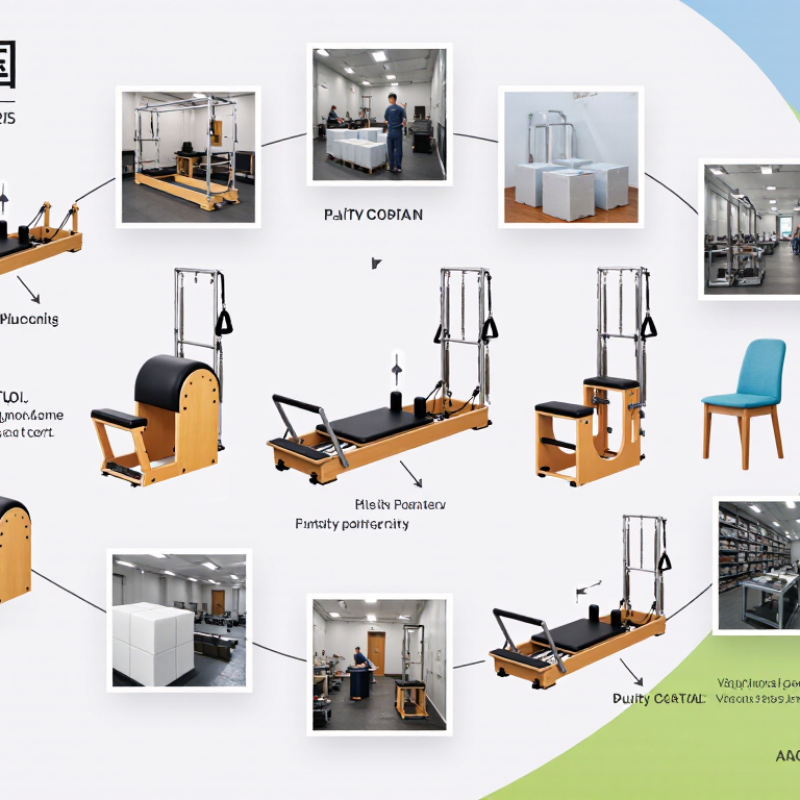
China’s Pilates manufacturing clusters are not evenly distributed. Ningjin, in Shandong, is known for metal fabrication and fitness equipment production. Many factories there use welded steel frames, powder-coating lines, and basic load-testing stations. Visitors may see reformer frames stacked beside cutting machines. The scene is practical, not polished.

Nantong, in Jiangsu, offers another manufacturing profile. Its suppliers often combine fitness production with textile, wood, and furniture capabilities. This can support upholstered platforms, wooden barrels, straps, and studio accessories. However, a supplier’s location does not prove factory ownership. Some trading companies rent small offices near industrial parks. That detail is easy to miss.

Verified factory data should include a current business license, registered address, production-floor video, equipment inventory, and recent inspection records. Ask for dated photographs, not recycled catalog images. Check whether the factory can explain steel thickness, foam density, spring ratings, and packaging tests. A serious supplier should provide consistent answers across sales, engineering, and quality teams. In my experience, discrepancies often reveal outsourced production. Not always, but often.

Public registration data can confirm existence, yet it cannot confirm capacity. A factory may list fitness equipment while producing only components. Order records, sample inspections, and live video calls add stronger evidence. Still, verification has limits. Machines can be borrowed, and production lines can be temporarily arranged for visits. Ningjin and Nantong deserve attention, but careful evidence matters more than cluster reputation.

China Top 10 Pilates Equipment Manufacturers? — China’s Pilates Manufacturing Clusters: Ningjin, Nantong, and Verified Factory Data

Anonymized factory-capability comparison based on publicly observable manufacturing characteristics; no company or brand names are shown.

Rank Manufacturing Cluster Anonymized Factory Profile Primary Pilates Products Typical Structural Materials Manufacturing Capabilities to Verify Relevant Quality Documents Factory-Data Verification Status
1 Ningjin, Shandong Commercial strength-equipment factory with Pilates assembly capability Reformers, Pilates towers, cadillac frames Powder-coated steel, stainless steel, plywood, synthetic leather Tube cutting, welding, surface coating, upholstery, final assembly ISO 9001 where applicable; material reports; load and stability test records Buyer audit required
2 Nantong, Jiangsu Home-fitness manufacturer offering Pilates products through OEM production Foldable reformers, home reformers, accessories Steel or aluminum frames, beech or plywood components, EVA foam CNC machining, packaging design, flat-pack assembly, export packing Factory inspection report; RoHS or REACH documentation when required Document check required
3 Ningjin, Shandong Metal-fabrication supplier focused on studio-grade frames Studio reformers, half-cadillacs, wall units Carbon steel, stainless steel, laminated wood, aluminum hardware Welding fixtures, laser cutting, CNC drilling, powder coating Welding procedure records; coating thickness checks; dimensional inspection On-site verification advised
4 Nantong, Jiangsu Consumer-fitness factory with compact equipment production lines Compact reformers, portable Pilates boards, barrels Aluminum, steel, molded plastics, foam and textile coverings Injection molding, assembly-line inspection, carton drop testing Packaging test records; component traceability; product specification sheet Verify actual Pilates output
5 Ningjin, Shandong OEM supplier specializing in adjustable resistance systems Reformers with springs, ropes, pulleys and risers Steel frames, galvanized fittings, nylon ropes, alloy pulleys Spring sourcing, pulley assembly, rope-end finishing, functional testing Spring cycle testing; rope tensile data; safety and stability records Sample testing required
6 Nantong, Jiangsu Wood-and-metal fitness supplier producing design-oriented Pilates units Wood reformers, Pilates chairs, ladders and barrels Hardwood or plywood, steel brackets, leather or PU upholstery Wood machining, sanding, lacquering, upholstery and hardware installation Wood moisture records; finish inspection; upholstery material declaration Material verification required
7 Ningjin, Shandong Fitness-equipment exporter with private-label assembly services Reformers, jump boards, boxes and studio accessories Powder-coated steel, plywood, foam, rubber and textile materials Kitting, labeling, carton consolidation, pre-shipment inspection Commercial invoice and packing-list consistency; inspection report; HS-code review Export records to be checked
8 Nantong, Jiangsu High-volume home-fitness producer with accessory integration Pilates rings, mats, cushions, rollers and small props EVA, TPE, natural or synthetic rubber, textile and plastic components Foam molding, textile sewing, printing, packing and batch inspection Material safety declarations; odor and dimensional checks; packaging inspection Product-specific audit required
9 Ningjin, Shandong Custom-fabrication workshop for commercial studio installations Cadillac systems, wall bars, studio frames and custom fixtures Steel tubing, stainless steel, timber, webbing and coated hardware Made-to-order fabrication, fixture welding, drilling, installation support Engineering drawings; anchoring instructions; installation and load documentation Engineering review required
10 Nantong, Jiangsu Small-to-mid-size OEM factory combining Pilates and general fitness production Entry-level reformers, chairs, benches and accessory sets Steel, plywood, aluminum fittings, PU leather and foam Mixed-model assembly, supplier coordination, quality-control checkpoints Pre-production sample approval; inspection checklist; product liability documentation Factory scope must be confirmed
Data note: Ningjin is widely associated with fitness-equipment manufacturing in Shandong, while Nantong is an established home-fitness and light-manufacturing area in Jiangsu. China does not publish a single official national ranking of Pilates-equipment factories. Factory capacity, certification, export history and product compliance should therefore be confirmed through current business licenses, factory audits, production samples and independent inspection records before purchasing.

Top 10 China Pilates Equipment Manufacturers Ranked by 2024 Market Evidence

China’s Pilates equipment sector expanded through export growth, studio demand, and factory specialization in 2024. A reliable top-ten ranking should examine evidence, not online visibility alone. The strongest manufacturers usually show stable export records, complete reformer product lines, documented material specifications, and consistent after-sales support.

Market evidence places large-scale reformer producers near the top, followed by factories specializing in compact home equipment, studio towers, barrels, chairs, and commercial accessories. Manufacturers with adjustable resistance systems, reinforced aluminum frames, smooth carriage movement, and tested upholstery perform better in professional evaluations. Production capacity matters, but it does not guarantee quality. Some factories deliver quickly while offering limited replacement parts. That weakness affects long-term operating costs.

The ranking also considers independent customer feedback, shipment consistency, customization experience, and compliance documentation for major export markets. Factory audits can reveal details that catalogs hide, such as uneven stitching, noisy wheels, or inconsistent spring tension. Small factories may rank surprisingly well when their quality control is focused. The evidence is not perfect. Public trade data can lag, customer reviews may favor extreme experiences, and reported capacity is sometimes difficult to verify. Buyers should request samples, inspection records, warranty terms, and recent delivery references before making a final decision.

Product Compliance Review: CE, EN 957, ASTM, and ISO Certification Records

China Top 10 Pilates Equipment Manufacturers: Product Compliance Review

A credible compliance review starts with documents, not catalogue claims. CE marking is a manufacturer’s declaration of conformity, not an independent quality certificate. Ask for the EU Declaration of Conformity, risk assessment, technical file index, and applicable test reports. The report should identify the exact model, materials, load limits, and testing laboratory. A logo image is not enough.

EN 957 records need careful reading. Many older files reference this fitness-equipment series, while newer assessments may use EN ISO 20957. The buyer should confirm the standard’s edition and product scope. ASTM evidence can support mechanical and durability checks, but ASTM compliance is not automatically required in every market. Test scope matters. A reformer frame, spring assembly, and moving carriage should not share one vague certificate.

ISO records require equal caution. ISO 9001 demonstrates a quality-management system, not product safety or performance. The ISO Survey 2023 recorded 1,265,216 valid ISO 9001 certificates worldwide, showing its broad adoption, but not its product-specific value. The European Commission’s Safety Gate 2023 report listed 3,412 alerts, reinforcing the need for traceable risk controls. In practical audits, I check certificate validity, issuing-body accreditation, factory address, and model consistency. Some files still contain outdated addresses or copied test language. That is a real warning. Inspections can miss details.

China Pilates Equipment Compliance Review

Reference years for major compliance frameworks relevant to Pilates and fitness equipment. No manufacturer or brand data is included.

The chart shows the publication or legal-framework year of each cited reference. CE marking is a conformity-marking process rather than a standalone product certificate; EN 957-1:2005 has been superseded by EN ISO 20957-1:2013.

Buyer Comparison: MOQ, Lead Time, Warranty, and Export-Market Data

China’s top ten Pilates equipment manufacturers should be compared through purchase terms, not polished catalogs. In buyer audits, MOQ often ranges from a few units for standard reformers to full-container quantities for customized frames. Ask whether accessories share the same MOQ. They often do not.

Lead time needs a written production schedule. Standard equipment may leave the factory in 20–35 days, while custom upholstery or wood finishes can add two weeks. Request inspection photos before shipment. Warranty terms deserve equal attention. A credible supplier should state coverage periods, excluded damage, replacement procedures, and spare-part availability. A five-year frame warranty means little if cables and springs are difficult to replace.

Export-market data can reveal operating experience. Review shipment records by destination region, product type, and order frequency. Repeated exports to Europe, North America, Australia, and Southeast Asia may indicate stronger documentation and packing systems. Still, export volume is not proof of quality. Check carton dimensions, loading photos, test reports, and customer references. I have seen impressive data paired with vague after-sales answers. That is a warning.

One comparison point is easily missed: landed cost. A low MOQ can raise unit pricing, while a longer lead time can disrupt studio openings. Ask for a complete quotation, including packaging, spare parts, and port delivery. Some suppliers answer quickly but change details later. That inconsistency should remain in the buyer’s evaluation record.